

Are you the photographer? Add your photo credit.Request removal


Horse coat color genetics continues to unfold, and the latest discovery from Etalon Diagnostics has the equine world buzzing. In a newly published scientific study in Animals (Obradovic et al., 2025) and a companion article by Etalon (April 3, 2025), researchers have identified three newly recognized Dominant White (W) variants in horses: W37 “Magic,” W38 “Neptune,” and W39 “Penny.”
These findings are not just about aesthetics—while they do help explain striking white patterns in certain breeds, they also enhance our understanding of equine genetics as a whole, with potential health insights for breeders and owners.
What Are These New Variants?

Found in Anglo-Arabians.
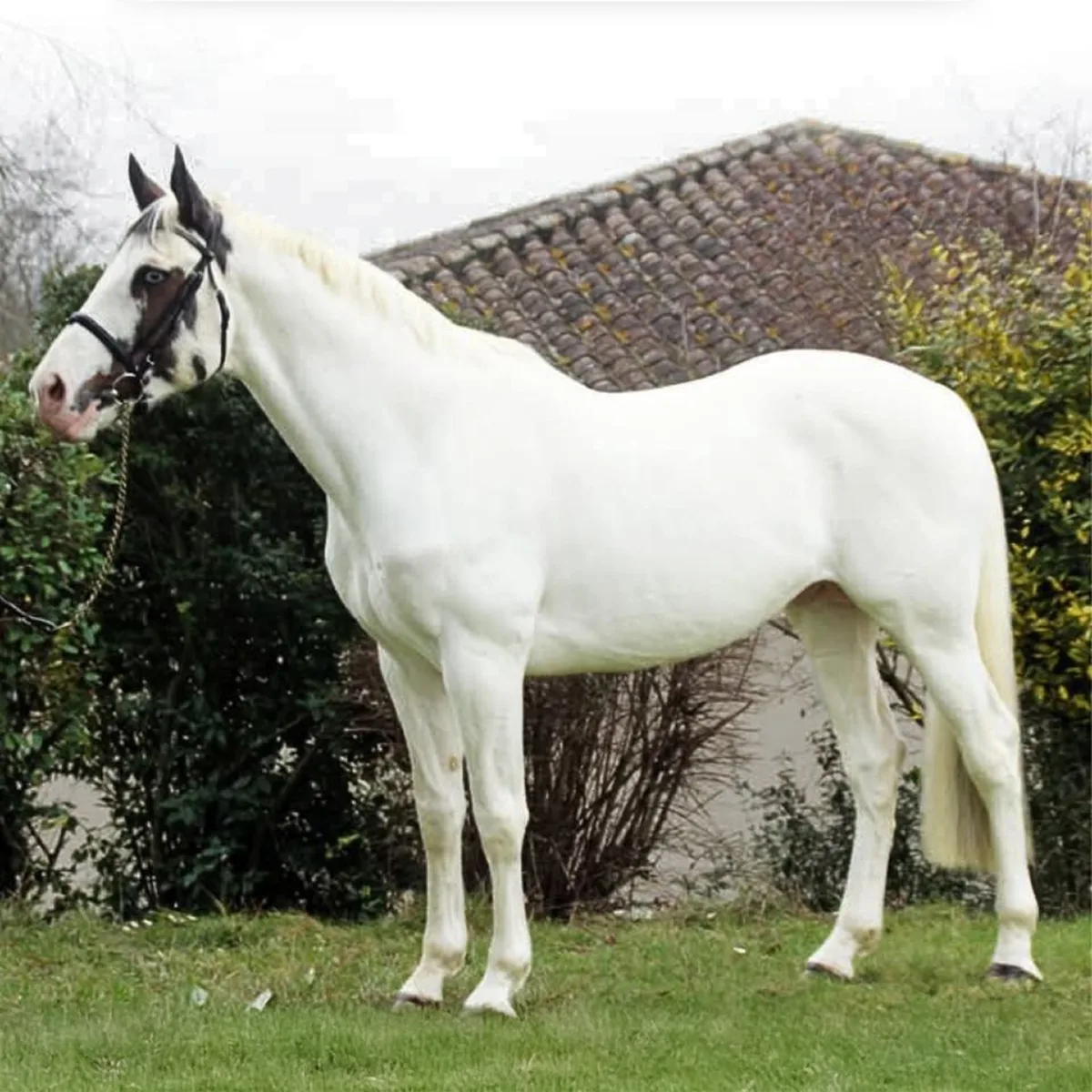
Horses carry bold white stockings, belly spots, facial markings, sometimes even a full white coat.
Blue eyes have been observed.
First identified in the stallion Viconte des Neigas.

Discovered in Polish Sporthorses.
Horses show sabino-like leg, belly, and face markings to full white coats, with partial or full blue eyes.
Found in Greenlough Melody G, with offspring such as Dragon White Z showcasing this variant.

Found in stock-type horses.
Appears as near-complete white with colored hairs sprinkled throughout.
Discovered in the mare Oakbank Pretty as a Penny.
These variants were all traced back to natural changes (“mutations”) in the KIT gene, which plays a crucial role in determining pigmentation.
Why Does This Matter?
Understanding these mutations helps breeders predict not just color patterns, but potential health factors too. White markings and depigmentation can sometimes signal genetic links to health conditions, like deafness in certain white-patterned horses (for example, the SW2 and SW5 mutations are associated with hearing loss).
Moreover, for breeders aiming for specific coat patterns, these insights enable better decision-making when planning future matings. Genetic testing can reveal whether a horse carries these variants, which can influence everything from a horse’s value to registration eligibility in breed associations.
It’s also worth noting: many horses with extensive white markings had no previous known genetic explanation until now. Thanks to these discoveries, breeders finally have answers for some of those mysteries.
Beyond Color: Toward Health and Heritage
The study emphasizes that these discoveries go far beyond looks. Every test contributes to a larger database that benefits both equine and human medicine, as many mammalian genes share similar functions across species.
Etalon continues to push the frontier of equine genetics, showing how advanced testing can support healthier, more predictable breeding while celebrating the diversity and beauty of the horse world.
Have some questions? Reach out to us on our website, via email, or right on Facebook.
Sources
- Obradovic, N.A., McFadden, A., Martin, K., Vierra, M., McLoone, K., Martin, E., Thomas, A., Everts, R.E., Brooks, S.A., Lafayette, C. (2025). Three Novel KIT Polymorphisms Found in Horses with White Coat Color Phenotypes. Animals, 15(915). DOI:10.3390/ani15070915
- Etalon Diagnostics (2025). Three More Reasons to Look Twice: Etalon Identifies New White Variants. etalonDx.com