

Are you the photographer? Add your photo credit.Request removal


How does a stallion owner guarantee that you’ll get a gold foal? There are only a few stallions who can genetically offer a foal with a diluted coat 100% of the time. Let’s uncover what to look for in order to get a bit of gold in your barn.
If you haven’t read our article on heterozygous or homozygous traits yet, have a look at that article first, as we’ll be leveraging some of that knowledge here to illustrate the cream dilution gene and its effects.
What is the cream dilution?
The cream dilution is what is known as an ‘incomplete mutation’ which means that the dilution affect changes dependent upon the saturation of that gene in the given horse. A horse that is heterozygous will be a single dilution (n/Cr) and transversely, a horse that is homozygous will be a double dilution (Cr/Cr). The cream gene itself also takes effect on all of the three bases (black, bay, and red).
Let’s speak phenotype for a second so that some of the language we use below will be clear. The phenotype is the observable characteristics of a horse that are a result of their genotype (genetics). The phenotype of some of these dilutions are easily confused with other phenotypes (such as champagne, flaxen, etc.), so it’s important to be armed with the genetic testing that is available to us today to truly understand the difference between them. There are some markers that help define these phenotypes, but at first glance, it’s not uncommon for cremello to be mistaken for perlino, or for champagne.
Base (N/N)

Single Dilute (n/Cr)

Smoky Black: (n/Cr + Black) These horses have a tendency of being nearly indistinguishable from their non-cream counterparts. They often appear solid black or as if they are slightly sun-faded. In the not-so-distant past, many smoky black horses had been confused for solid black yet they produced palominos and buckskins off of horses who did not carry the cream gene. This caused a great deal of confusion around the cream gene at the time.
Double Dilute (Cr/Cr)

Smoky Cream: (Cr/Cr + Black) The smoky cream can be hard to differentiate from the other double dilutes but often looks a bit sooty compared to the others (especially the cremello who often looks completely white or cream), their body colour and mane can be the same, but often times the mane and tail are a bit peach or bronze in tone.
Base (N/N)

Single Dilute (n/Cr)

Palomino: (n/Cr + Red) The single dilution of the red horse (chestnut/sorrel) will have a golden body with white, silver, or light cream toned mane and tail. Not to be confused with a red base with a flaxen mane and tail which don’t actually have a positive cream allele (n/Cr). With the palomino, the body itself will vary from deep chocolate (almost a liver chestnut) straight to nearly white.
Double Dilute (Cr/Cr)

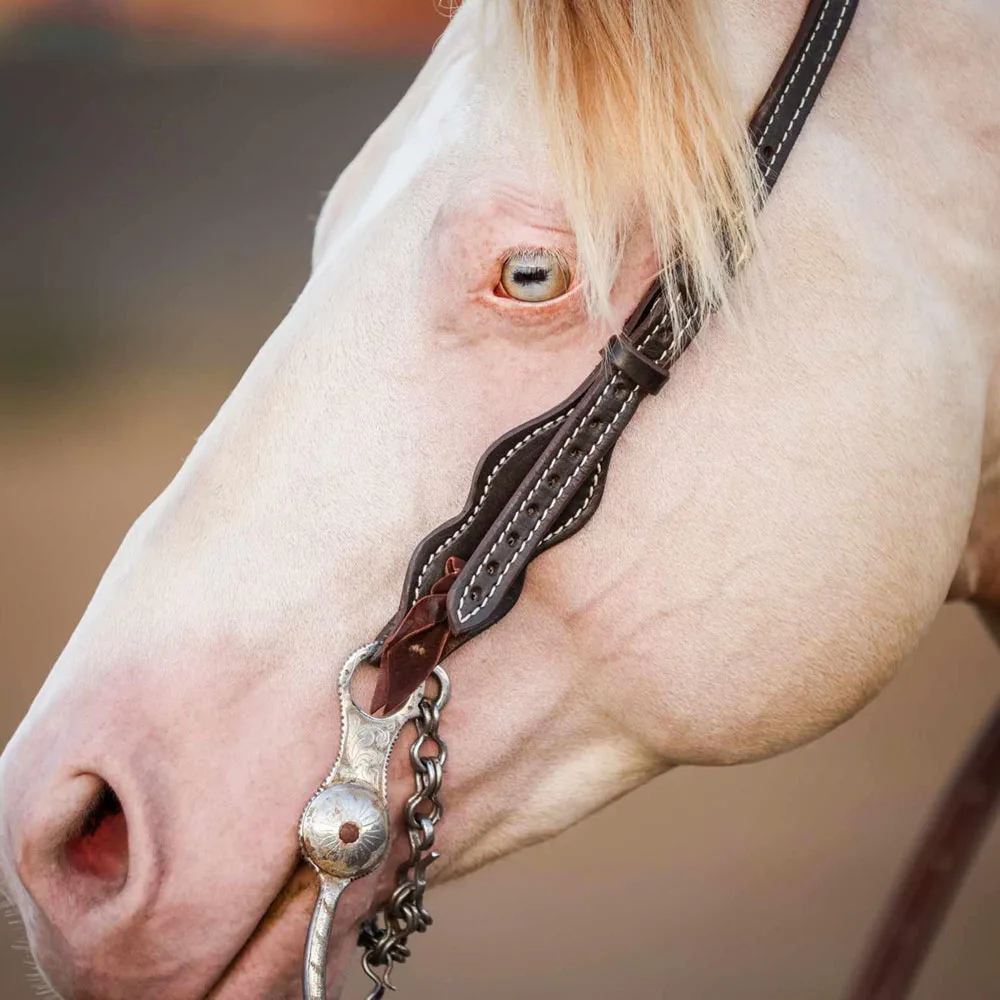
Cremello: (Cr/Cr + Red) The double dilution of the red (chestnut/sorrel) horse will be a variation of white to solid cream in colour with very little (if any) distinction between their mane/tail and body. These horses are often so white that paint markings, facial markings, and leg markings are often 'hidden'. The cremello will also have pink skin and blue eyes, but important to note that very few have freckles which are often associated with the champagne dilution.
Base (N/N)

Single Dilute (n/Cr)

Buckskin: (n/Cr + Bay) The buckskin is a horse with a bay base (agouti). Interestingly, the cream dilution gene doesn’t affect the points on a bay horse, so your single dilution of a bay will retain its black points and become a golden bodied horse with black points. However, the red or black horse will be diluted across their entire body, inclusive of their points. Much like the palomino, there are also variations of the buckskin which range from a deep bronze colour to nearly white. Sometimes this phenotype is confused for dun horses as the dun dilution also lightens the body and leaves the points intact, much like a buckskin. However, the genotype will reveal the real answers upon testing.
Double Dilute (Cr/Cr)

Perlino: (Cr/Cr + Bay) The bay base of the body becomes light peach/cream with the points now being diluted to a darker cream/bronze/peach tone (sometimes these are hard to see) or dark cream/amber. They will often have blue or green eyes and appear to have “smoky” points. Note that the perlino can often appear rather peachy in comparison to the slightly sooty Smoky Cream, and the white to light cream cremello.
How do these horses pass on the cream gene?
A single (heterozygous) cream dilution will pass that single allele (n/Cr) on to 50% of their foals; homozygous cream dilution horses will pass on at least one (n/Cr) allele to 100% of their foals. For example, if you own a bay mare and really want a buckskin, for 100% colour guarantee, you'd need to breed to a double dilute; if you breed to a single dilute (a buckskin), you have a 50% chance of getting a dilute foal.
An example of what to expect:
Interestingly, I myself have my Red Dun Roan (a/a, e/e, D/nd1, n/Rn) AQHA Mare, "Evie", Holy Chip Shes Good, booked to a cremello stallion, Fully Furnished "Terry" (A/a, e/e, Cr/Cr, n/W35), for 2025. Here is the chart highlighting their differences:
| Horse | Red Factor | Agouti | Cream | Dun | Roan |
|---|---|---|---|---|---|
| Fully Furnished | e/e | A/a | Cr/Cr | N/N | N/N |
| Holy Chip Shes Good | e/e | a/a | N/N | D/nd1 | n/Rn |
Here are the potential variations I can be expecting in 2025:
| % of probability | Red Factor | Agouti | Cream | Dun | Roan | W35 White | Expression |
|---|---|---|---|---|---|---|---|
| 12.5% | e/e | A/a or a/a | n/Cr | N/N | N/N | N/N | Palomino |
| 12.5% | e/e | A/a or a/a | n/Cr | N/N | N/N | n/W35 | Palomino + n/W35 |
| 12.5% | e/e | A/a or a/a | n/Cr | N/N | n/Rn | N/N | Palomino Roan |
| 12.5% | e/e | A/a or a/a | n/Cr | N/N | n/Rn | n/W35 | Palomino Roan + n/W35 |
| 12.5% | e/e | A/a or a/a | n/Cr | D/nd1 | N/N | N/N | Palomino Dun (Dunalino) |
| 12.5% | e/e | A/a or a/a | n/Cr | D/nd1 | N/N | n/W35 | Palomino Dun (Dunalino) + n/W35 |
| 12.5% | e/e | A/a or a/a | n/Cr | D/nd1 | n/Rn | N/N | Palomino Dun (Dunalino) Roan |
| 12.5% | e/e | A/a or a/a | n/Cr | D/nd1 | n/Rn | n/W35 | Palomino Dun (Dunalino) Roan + n/W35 |
Have questions? Reach out or comment on the post on Facebook and we’ll chat with you there! Looking to infuse a little gold into your barn? Have a look at our platform, there are already quite a number of single and double dilutes!