

Are you the photographer? Add your photo credit.Request removal


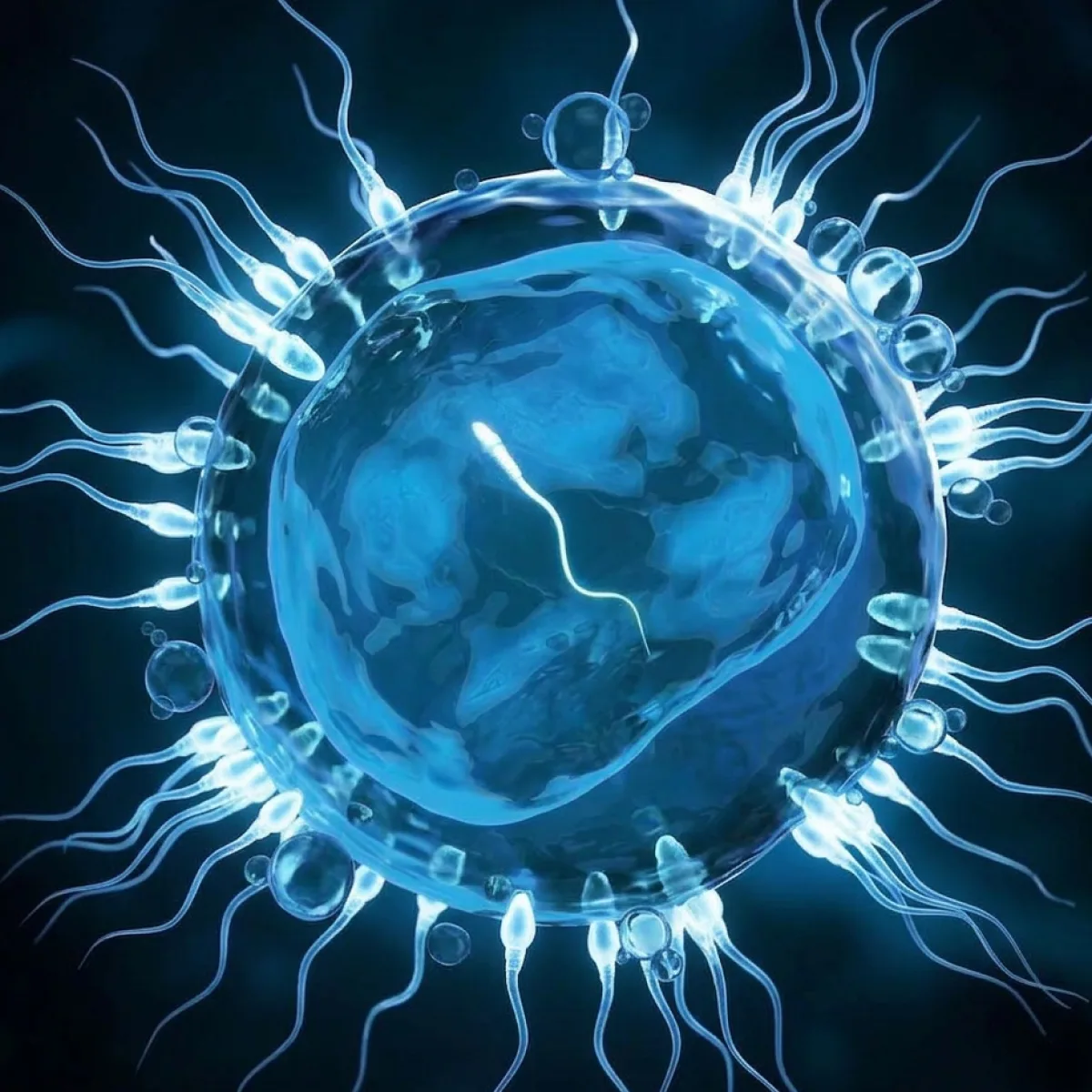
A major milestone just landed for equine reproduction – and it’s coming out of Florida. Researchers with the University of Florida Department of Animal Sciences have successfully fertilized an equine egg using in‑vitro fertilization (IVF), producing what they describe as the first equine IVF embryo achieved in the state of Florida.1
It’s a headline moment, but it’s also a practical one: the research targets a persistent limitation in the performance horse world – the reality that some of the most valuable mares can’t safely carry a pregnancy, even when they’re the ideal genetic choice for the next generation.2
Why this matters: protecting elite mares while expanding options
UF frames IVF as a tool that could help owners protect mare welfare by creating embryos outside the body and then placing them into a recipient (surrogate) mare. That matters for mares that cannot successfully conceive or carry their own pregnancies due to foaling trauma, uterine disease, or other complications that make pregnancy an added risk. This also provides an alternative option to ICSI for reproduction purposes; potentially at a reduced cost.3
The surprising finding: frozen semen outperformed fresh and chilled
One of the most noteworthy takeaways from UF’s report is counterintuitive: frozen‑thawed semen performed better in their IVF process than either fresh or chilled semen. The team experimented with chilled semen (a common industry standard for equine artificial insemination), fresh semen, and frozen‑thawed semen at various temperatures and time intervals – and found that frozen‑thawed semen worked much better for their IVF outcome.4
UF’s explanation centres on capacitation – the set of physical and biochemical changes sperm must undergo before it can fertilize an egg. In horses, that capacitation appears to require a unique temperature within a specific timeframe. The freezing‑and‑thawing process applies mild stress to sperm, and UF reports that this biological pressure helped trigger the changes needed for capacitation, allowing frozen sperm to be used immediately after thawing and with fewer steps.5
From a management standpoint, this is more than a scientific curiosity. Frozen semen can be stored indefinitely and thawed when oocytes (eggs) from the mare are available, making embryo production more predictable and more user‑friendly than chilled semen that must be shipped and typically survives for only a day or two.6
A milestone after decades of attempts
UF notes that researchers have been pursuing successful equine IVF outcomes for more than 35 years. That context matters: equine IVF has historically lagged behind other species, and each verified step forward represents years of iteration around a reproductive system that behaves differently than cattle or humans.7
Florida’s economic context: why local breakthroughs matter
UF situates this work within Florida’s broader equine economy. The university reports that breeding, training, show events, racing, rodeo, and polo support an estimated 244,200 jobs in Florida, with direct horse‑care industries contributing about $6.8 billion annually and indirect impacts (including equine tourism) contributing an additional $11.7 billion.8
How far behind cattle is the equine industry on IVF?
It’s natural to compare the equine IVF timeline to cattle, where IVF has been studied, refined, and commercialized for decades. However, “behind” depends on what milestone you use: the first successful proof point (a live birth), or the point where producers could realistically use the technology at scale.9
In cattle, peer‑reviewed literature reports normal development following IVF and describes a 1981 live calf outcome associated with early bovine IVF work – a useful benchmark for when “IVF success” moved beyond theory.10
The next major step was repeatable field application. Reviews of bovine OPU (ovum pick‑up) and in vitro production note that OPU was adapted for cattle in 1987 and, through subsequent refinement, became a widely used method within modern cattle embryo programs – specifically within the dairy cattle industry.11
Broader review literature describes bovine in‑vitro procedures as becoming established commercially on an international basis during the 1990s, with continued growth and technical gains through the 2000s.12,13
By that yardstick, equine IVF’s “verified breakthrough” timeline is roughly 30–45 years behind cattle, depending on whether you compare against the first live calf benchmark (early 1980s) or commercial establishment (1990s). That gap also underscores why this UF milestone is being framed as significant: once the science stabilizes, veterinary infrastructure and commercial services tend to follow.14,15
What comes next
UF’s announcement is not the finish line – it’s a door opening. The next chapters will be about repeatability, access, cost, and how quickly veterinary reproduction programs can translate lab milestones into consistent outcomes. Still, the early signal from this work is encouraging: if frozen semen truly remains an advantage (not a compromise) for equine IVF, the pathway toward practical, schedule‑friendly use could accelerate faster than many would have expected.16,17
Sources
- University of Florida. (2026, March 12). Researchers successfully make horse embryo with IVF, a first in Florida. UF News. https://news.ufl.edu/2026/03/equine-ivf/
- University of Florida. (2026, March 12). Researchers successfully make horse embryo with IVF, a first in Florida. UF News. https://news.ufl.edu/2026/03/equine-ivf/
- University of Florida. (2026, March 12). Researchers successfully make horse embryo with IVF, a first in Florida. UF News. https://news.ufl.edu/2026/03/equine-ivf/
- University of Florida. (2026, March 12). Researchers successfully make horse embryo with IVF, a first in Florida. UF News. https://news.ufl.edu/2026/03/equine-ivf/
- University of Florida. (2026, March 12). Researchers successfully make horse embryo with IVF, a first in Florida. UF News. https://news.ufl.edu/2026/03/equine-ivf/
- University of Florida. (2026, March 12). Researchers successfully make horse embryo with IVF, a first in Florida. UF News. https://news.ufl.edu/2026/03/equine-ivf/
- University of Florida. (2026, March 12). Researchers successfully make horse embryo with IVF, a first in Florida. UF News. https://news.ufl.edu/2026/03/equine-ivf/
- University of Florida. (2026, March 12). Researchers successfully make horse embryo with IVF, a first in Florida. UF News. https://news.ufl.edu/2026/03/equine-ivf/
- Meredith Bauer‑Mitchell. (2026, March 12). Researchers successfully make horse embryo with IVF, a first in Florida. UF/IFAS News Blog. https://blogs.ifas.ufl.edu/news/2026/03/12/researchers-successfully-make-horse-embryo-with-ivf-a-first-in-florida/
- Brackett, B. G., et al. (1982). Normal development following in vitro fertilization in the cow. Biology of Reproduction, 27(1), 147–158. (PubMed record). https://pubmed.ncbi.nlm.nih.gov/6896830/
- Galli, C., et al. (2005). Ovum pick up and in vitro production in the bovine after use in several generations: a 2005 status. Theriogenology, 64(8), 1952–1965. https://pubmed.ncbi.nlm.nih.gov/16253322/
- Humpherson, P. G., Leese, H. J., & Sturmey, R. G. (2000). Metabolism and viability of preimplantation embryos. Human Reproduction, 15(Suppl 5), 47–60. (See discussion of in‑vitro embryo production becoming established commercially in the 1990s.) https://oup.silverchair-cdn.com/article-minimal/554999
- Hansen, P. J. (2019). Review: Recent advances in bovine in vitro embryo production: reproductive biotechnology history and methods. Animal, 13(S1), s1–s13. https://www.sciencedirect.com/science/article/pii/S1751731119002775
- University of Florida. (2026, March 12). Researchers successfully make horse embryo with IVF, a first in Florida. UF News. https://news.ufl.edu/2026/03/equine-ivf/
- Brackett, B. G., et al. (1982). Normal development following in vitro fertilization in the cow. Biology of Reproduction, 27(1), 147–158. (PubMed record). https://pubmed.ncbi.nlm.nih.gov/6896830/
- University of Florida. (2026, March 12). Researchers successfully make horse embryo with IVF, a first in Florida. UF News. https://news.ufl.edu/2026/03/equine-ivf/
- Meredith Bauer‑Mitchell. (2026, March 12). Researchers successfully make horse embryo with IVF, a first in Florida. UF/IFAS News Blog. https://blogs.ifas.ufl.edu/news/2026/03/12/researchers-successfully-make-horse-embryo-with-ivf-a-first-in-florida/